



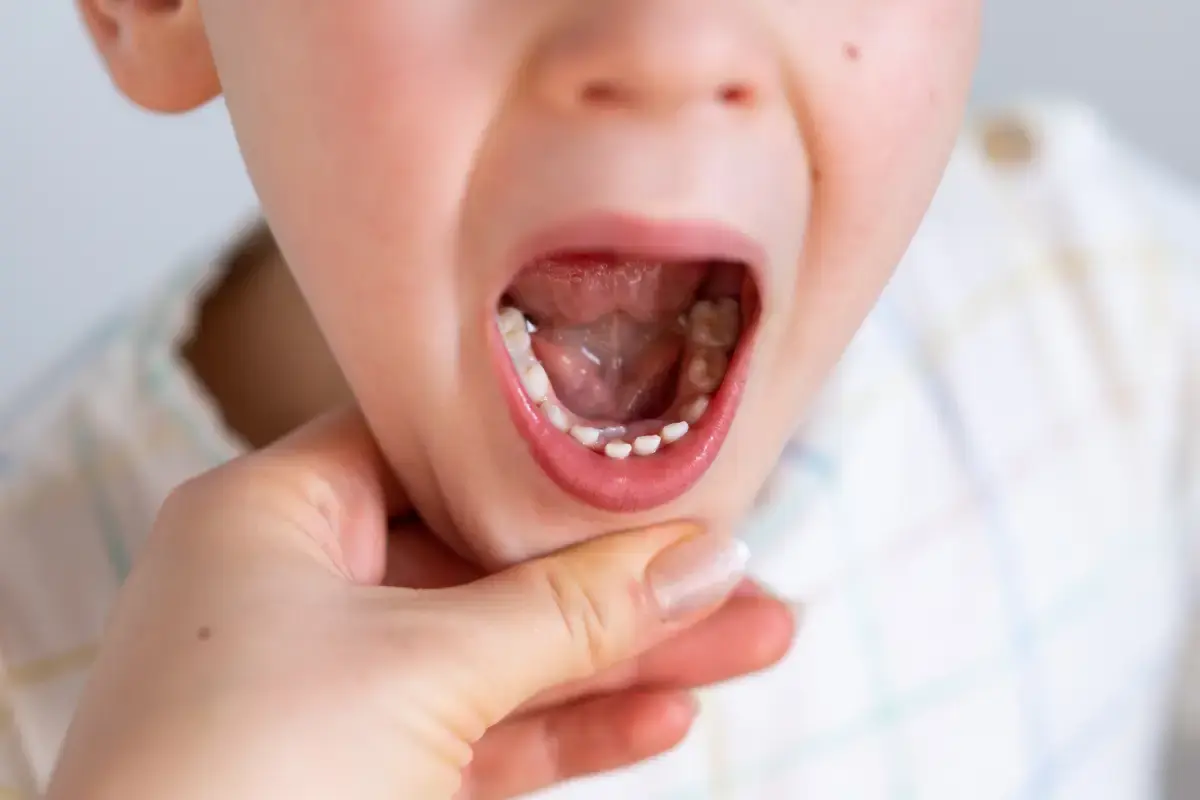
It’s normal for there to be a bit of a gap after a baby tooth falls out before the permanent tooth fully emerges, but when weeks or months go by without any sign of the adult tooth, it’s understandable for parents to start wondering what’s going on. This is a common enough concern in pediatric dental care, and there are a few possible explanations worth understanding.
Dr. Pollock at Rowlett Dental Kids evaluates this regularly during checkups, and while it’s often nothing to worry about, it’s always worth having it looked at to confirm everything is developing as expected.
What’s Considered a Normal Timeline
After a baby tooth falls out, it’s typical for the permanent tooth to take anywhere from a few weeks up to a few months to fully emerge, depending on the specific tooth and how far along its development already was. Front teeth often come in a bit faster than back teeth, and there’s a reasonable amount of natural variation from one child to another, even among siblings.
Reasons an Adult Tooth Might Be Taking Longer Than Expected
Normal individual variation: Some children’s teeth simply come in a bit later than average, without any underlying issue at all. This is one of the most common and least concerning explanations.
The permanent tooth is positioned at an angle: Sometimes a permanent tooth is developing at a slight angle rather than straight up, which can delay its emergence and occasionally requires a bit of monitoring or, in some cases, a nudge from an orthodontic standpoint later on.
Not enough space: If there isn’t quite enough room in the jaw for the permanent tooth to come in, it can take longer to break through the gum tissue, or it may need some assistance to fully emerge properly.
A missing permanent tooth: In some cases, a permanent tooth simply never developed, a condition that’s more common than people realize and is usually identified through an X-ray rather than something that would be obvious just from looking.
Dense or thickened gum tissue: Occasionally, the gum tissue over an emerging tooth is thicker than usual, which can slow down how visible the tooth’s progress appears, even though the tooth itself is developing normally underneath.
An underlying dental issue: Less commonly, a cyst or other developmental issue near the emerging tooth can interfere with its progress, which is part of why an X-ray is a helpful step if a tooth seems significantly delayed.
When to Have It Evaluated
If it’s been more than a few months since a baby tooth fell out with no sign of the permanent tooth, it’s worth scheduling an evaluation rather than continuing to wait. This is especially true if there’s any swelling, discomfort, or if neighboring teeth seem to be shifting into the empty space, since that can make room tighter for the permanent tooth once it does start to emerge.
What an Evaluation Typically Involves
An evaluation for a delayed tooth usually includes an X-ray, which allows us to see whether the permanent tooth is present, how it’s positioned, and roughly how much further it has to travel before emerging. This gives a much clearer picture than simply waiting and watching, since a lot of what’s happening is below the surface and not visible during a standard exam alone.
If the X-ray shows the tooth is present and developing normally, but simply taking its time, continued monitoring at regular checkups is often all that’s needed. If the tooth appears to be angled, blocked, or if space is a concern, further steps can be discussed based on exactly what’s found.
If it’s been a while since your child lost a baby tooth with no sign of the permanent one, contact us so we can take a look and give you a clear picture of what’s happening.
Why Monitoring Matters, Even When It’s Likely Nothing
Most of the time, a delayed permanent tooth turns out to be completely normal, simply taking a bit longer on its own timeline. But since a few less common causes are worth ruling out, having it evaluated provides peace of mind either way and ensures nothing is missed that could benefit from early attention.
We’re Here to Watch Over Every Stage of Your Child’s Smile
A missing gap where a permanent tooth should be can be worth a closer look, even if it usually turns out to be perfectly normal. Visit our dental practice, and let’s make sure your child’s smile is developing exactly as it should.